
6 June
Nationaldagen
How to say it
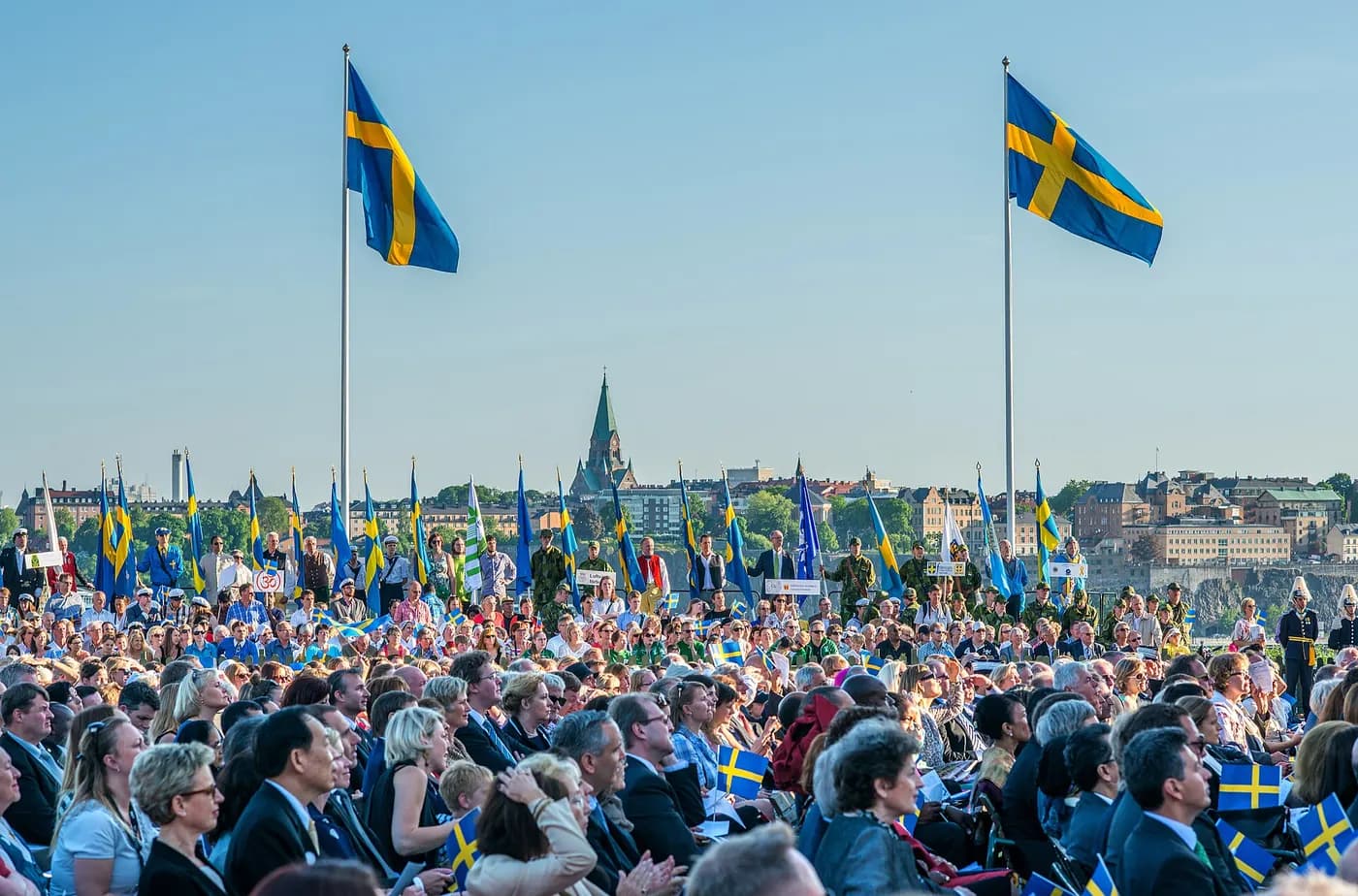
6 June is Sweden's National Day and the day of the Swedish flag. It marks Gustav Vasa's election as king in 1523 and the constitution signed in 1809.

Where it comes from
On 6 June 1523 Gustav Vasa was elected king at Strängnäs, bringing the Kalmar Union to an end. On the same date in 1809 a new constitution, the regeringsform, was signed. Before it became a national day the date was known as Gustafsdagen.
The idea of a national day emerged in the early 1890s, inspired by Norway and Denmark, which already marked 17 May and 5 June. Other dates were proposed, including Midsummer Day and 6 and 30 November. On 6 June 1893 Artur Hazelius, founder of the Nordiska museet and Skansen, held a celebration in that spirit at Skansen.
In 1916 the date was named Svenska flaggans dag, Swedish Flag Day. The idea came from the merchant Nils Ljunggren, and the first celebration took place at Stockholm Olympic Stadium with the royal family present. Hugo Alfvén's Sveriges flagga had its premiere there. From 1918 the king presented flags to various organisations.
Flying the flag on land was a novelty. The first time it was raised on the royal palace, in 1873, it drew sharp criticism. Today's flag was fixed in 1906, after the union with Norway was dissolved and the union mark, nicknamed sillsallaten, the herring salad, was removed.
Only in 1983 did 6 June officially become the National Day. In 2005 it became a public holiday, with Whit Monday dropped in exchange.

How it is celebrated today
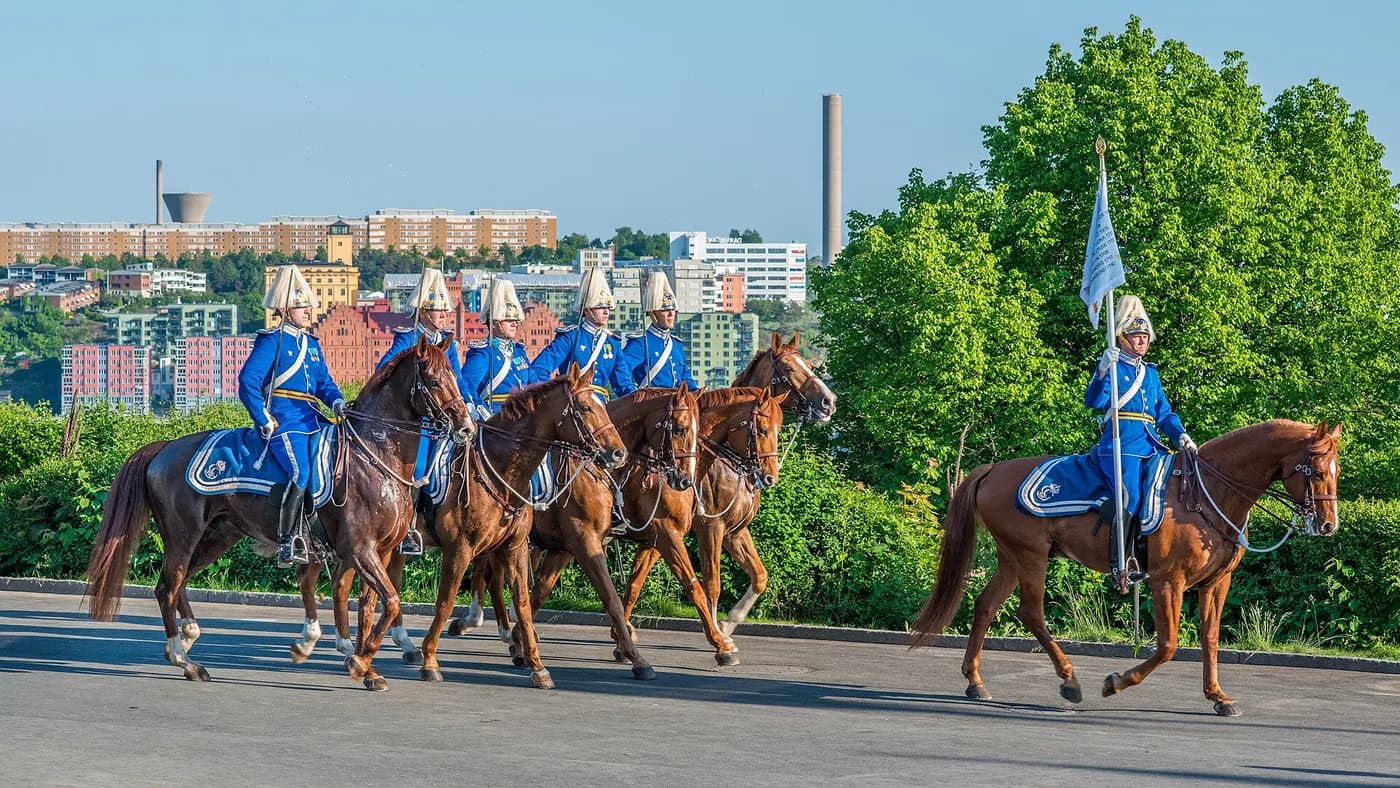
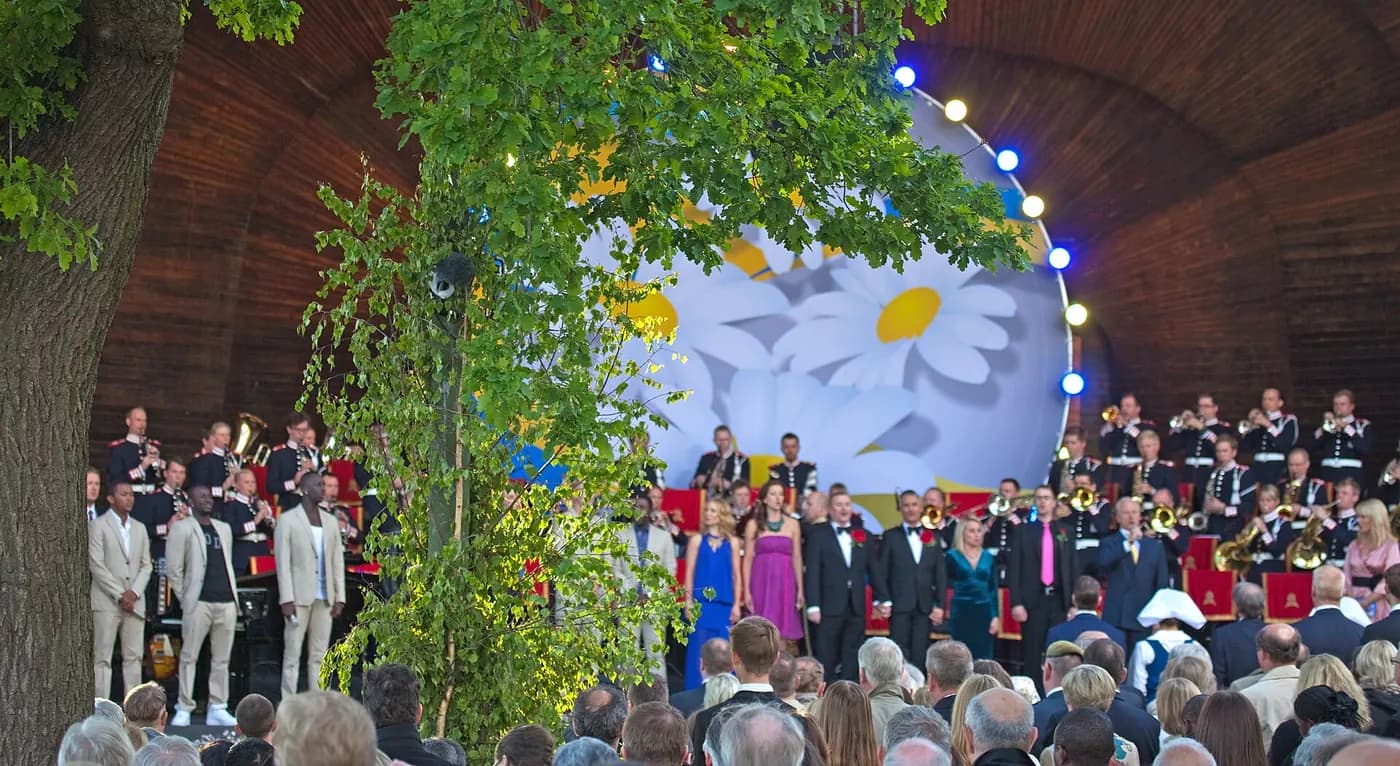
The royal family rides in horse-drawn carriages from the palace to the Solliden stage at Skansen, where the king gives a speech and presents banners to associations. It is broadcast on Swedish television. The palace opens to the public for the day, and at noon a 21-gun salute is fired from Skeppsholmen. Many municipalities hold their own ceremonies.
It is nothing like Norway's 17 May: a 2017 survey found that about one Swede in three celebrates. There is no set dish either. Picnics and barbecues are common, and bakeries put out the nationaldagsbakelse.
Words for the day
Tap a word to hear it.
- the flag
- a banner, like the ones the king presents
- public holiday (printed red in the calendar)
- a ceremonial speech
On the table
- nationaldagsbakelse
- an almond-based pastry topped with strawberries and a small flag, created in 1994
- jordgubbar
- strawberries, the first of the summer
- sill och färskpotatis
- herring and new potatoes, a spread much like Midsummer's
- grillat
- barbecued food, a common choice that day
What people sing
- Du gamla, du fria
- The national anthem, written by Richard Dybeck in 1844. It has never been adopted by law and rests on tradition alone.
- Sveriges flagga
- Music by Hugo Alfvén, words by K.G. Ossiannilsson, written for the first Flag Day in 1916.

From Chile
In Sweden 6 June is almost summer, while in Chile it falls in late autumn. Nor is it Sweden's version of Chile's 18 September: the Swedish date does not mark independence but a king's election in 1523 and a constitution of 1809.
Sources
- nordiskamuseet.se/utforska/hogtider/sveriges-nationaldag
- sv.wikipedia.org/wiki/Sveriges_nationaldag
- kungahuset.se/arkiv/nyheter/2026-06-06-nationaldagen-2026
- kungahuset.se/arkiv/pressmeddelanden/2026-05-25-kungafamiljens-firande-av-nationaldagen-2026
- sv.wikipedia.org/wiki/Du_gamla,_du_fria
- sv.wikipedia.org/wiki/Sveriges_flagga_(s%C3%A5ng)
- sv.wikipedia.org/wiki/Nationaldagsbakelse