24 December
Julafton
How to say it
Julafton, Christmas Eve on 24 December, is the main day of the Swedish Christmas, just as Nochebuena is in Chile. It is a family occasion: people eat the julbord, watch the Disney special on television and wait for the tomte to bring the presents.

Where it comes from
The word jul probably comes from an Old Swedish word meaning feast or invitation. Older people did not speak of celebrating Christmas but of dricka jul, drinking Christmas. Any link to pre-Christian midwinter festivals is uncertain.
In farming society, 24 December was the most solemn day of the year. The house was cleaned, tools were put away, firewood was brought in and sometimes straw, called julglädjen or Christmas joy, was spread on the floor. From the Middle Ages, the Advent fast brought fish, above all lutfisk, and porridge to the Christmas table.
In the 18th century presents were brought by the julbock, the Yule goat. The word julklapp comes from a prank: knocking on a door, throwing the gift inside and running off. In the late 19th century the farm tomte, Saint Nicholas and the American Santa Claus merged into the jultomte, and Jenny Nyström's Christmas cards fixed his image.
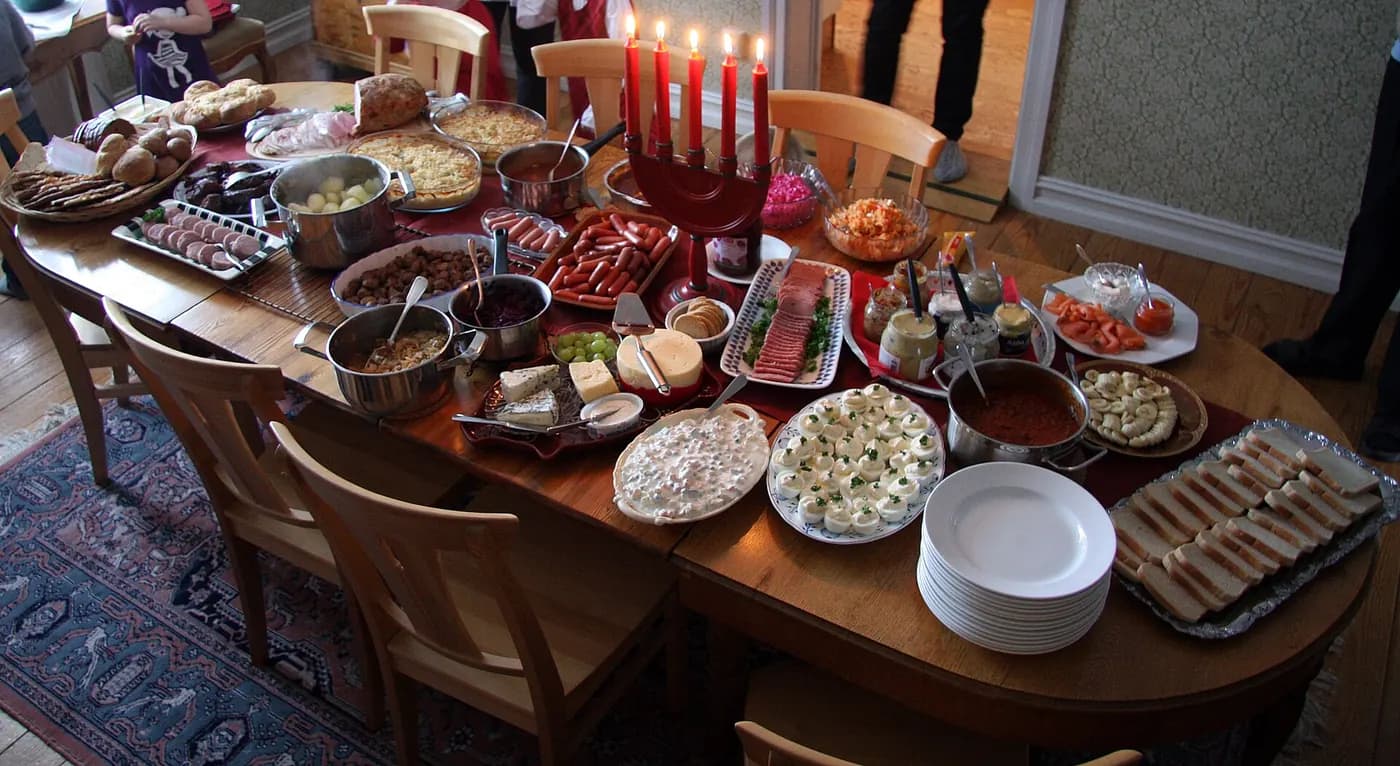
The food changed too. In the early 20th century Swedes began opening the Christmas Eve meal with a smörgåsbord, followed by lutfisk and rice pudding. Christmas ham only became common in that century, helped along by Carl Larsson's painting Julaftonen from 1904. Meatballs arrived in the 1970s, and in the second half of the century everything merged into one large julbord.
In 1960 Swedish television first showed Kalle Anka och hans vänner önskar God Jul, a Disney special that premiered in the United States in 1958. It has been broadcast every Christmas Eve since, and it divides the day into before and after Kalle Anka.

How it is celebrated today
Many families eat the julbord around midday: ham, pickled herring, meatballs, prinskorv sausages, Janssons frestelse and dopp i grytan, bread dipped in the ham stock. That is why Christmas Eve is also called dopparedagen, dipping day. To drink there is julmust, a malt soft drink consumed mainly at Christmas.
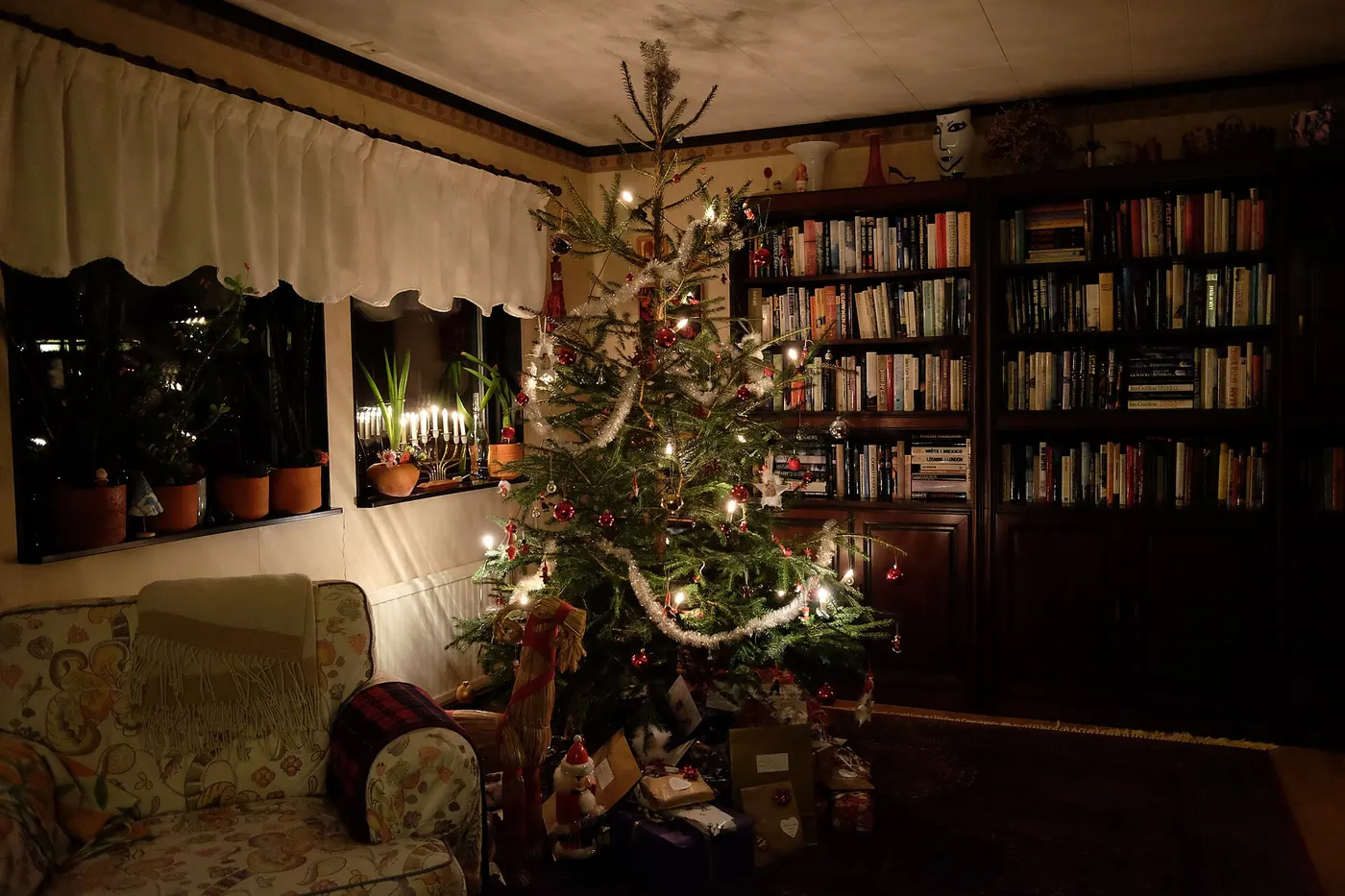
In the afternoon the family gathers in front of Kalle Anka, and afterwards the tomte arrives with the presents. An almond is hidden in the rice pudding, and tradition says whoever finds it will be the next to marry. Many go to midnight mass, or to julotta, the early service on Christmas morning.
Words for the day
Tap a word to hear it.
- The Christmas buffet.
- Christmas present.
- The farm spirit. The jultomte brings the presents.
- Merry Christmas!
On the table
- julskinka
- Christmas ham, the centrepiece of the julbord.
- dopp i grytan
- Bread, often vörtbröd, dipped in the hot stock the ham was cooked in.
- Janssons frestelse
- A gratin of potato, onion, sprats and cream. It became known in the 1920s.
- risgrynsgröt
- Rice pudding. It reached the Christmas table in the 19th century and hides an almond.
- julmust
- A malt and hop soft drink created in the early 20th century by Harry Roberts in Örebro.
What people sing
- Nu tändas tusen juleljus
- Words and music by Emmy Köhler, 1898. One of the most sung Christmas songs in Sweden.
- Nu är det jul igen
- An old Swedish and Danish song sung while dancing in a ring around the tree.

From Chile
In Sweden, as in Chile, the evening of the 24th is the one that counts, so the calendar lines up. What flips is the weather: the julbord is hearty food meant for the Nordic winter, and in Chile it arrives in high summer.
Sources
- nordiskamuseet.se/en/traditions-celebrations/christmas
- sv.wikipedia.org/wiki/Julafton
- sv.wikipedia.org/wiki/Jul_i_Sverige
- sv.wikipedia.org/wiki/Julbord
- sv.wikipedia.org/wiki/Kalle_Anka_och_hans_vänner_önskar_God_Jul
- sv.wikipedia.org/wiki/Nu_tändas_tusen_juleljus
- sv.wikipedia.org/wiki/Nu_är_det_jul_igen
- sv.wikipedia.org/wiki/Julmust
- sv.wikipedia.org/wiki/Dopp_i_grytan