
30 April
Valborg
How to say it
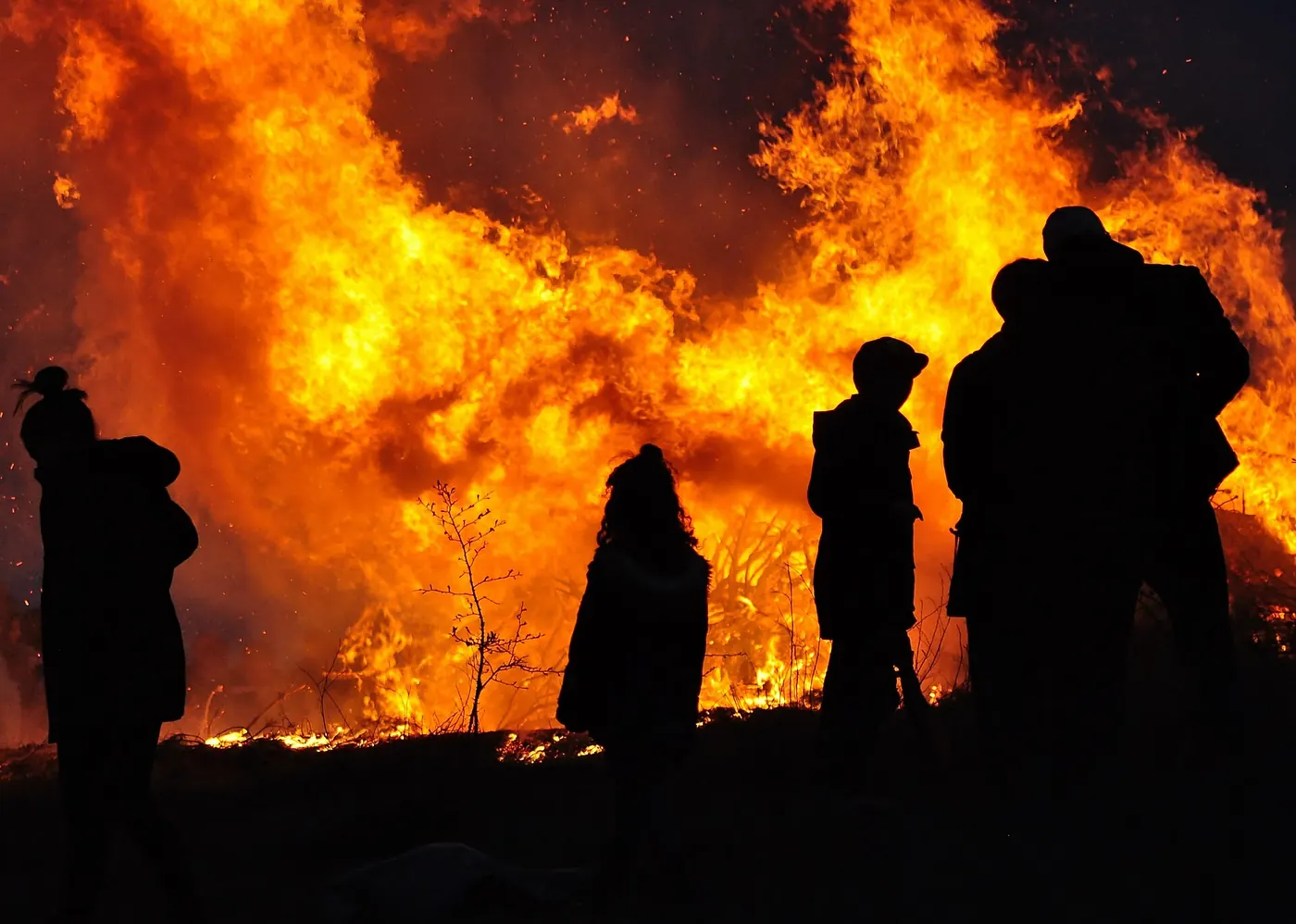
Valborg, or Walpurgis Night, is the evening of 30 April, when Sweden sees off the winter with bonfires and choirs singing to the spring. The next day, 1 May, is a public holiday.

Where it comes from
The name comes from Walpurgis, a saint who lived in Germany in the 8th century. Her feast day, 1 May, was brought to Sweden by Germans in the Middle Ages, and the evening before became valborgsmässoafton.
At the Reformation in the 16th century the new church set out to remove saints' days. Valborg survived as a folk festival, partly because it sat right next to 1 May, an important date in the farming year. In many places it was when livestock were first let out to graze.
There are several explanations for the bonfires. The Nordiska museet points to protecting grazing animals from predators and supernatural beings. In Germany, Walpurgisnacht was the witches' night, and the custom of lighting fires reached Swedish towns from there before spreading to the countryside.
As early as the Middle Ages the students of the day, the djäknar, held rowdy processions through the towns. In 1842 the Uppsala student choir Allmänna Sången made Valborg one of its four annual celebrations. At Skansen in Stockholm the arrival of spring has been marked since 1894.
By the late 19th century the night had a poor reputation: newspapers in the 1880s reported drunken workers on Djurgården. After the Second World War, labour and community organisations began running bonfires in residential areas, which is largely how it is done today.

How it is celebrated today
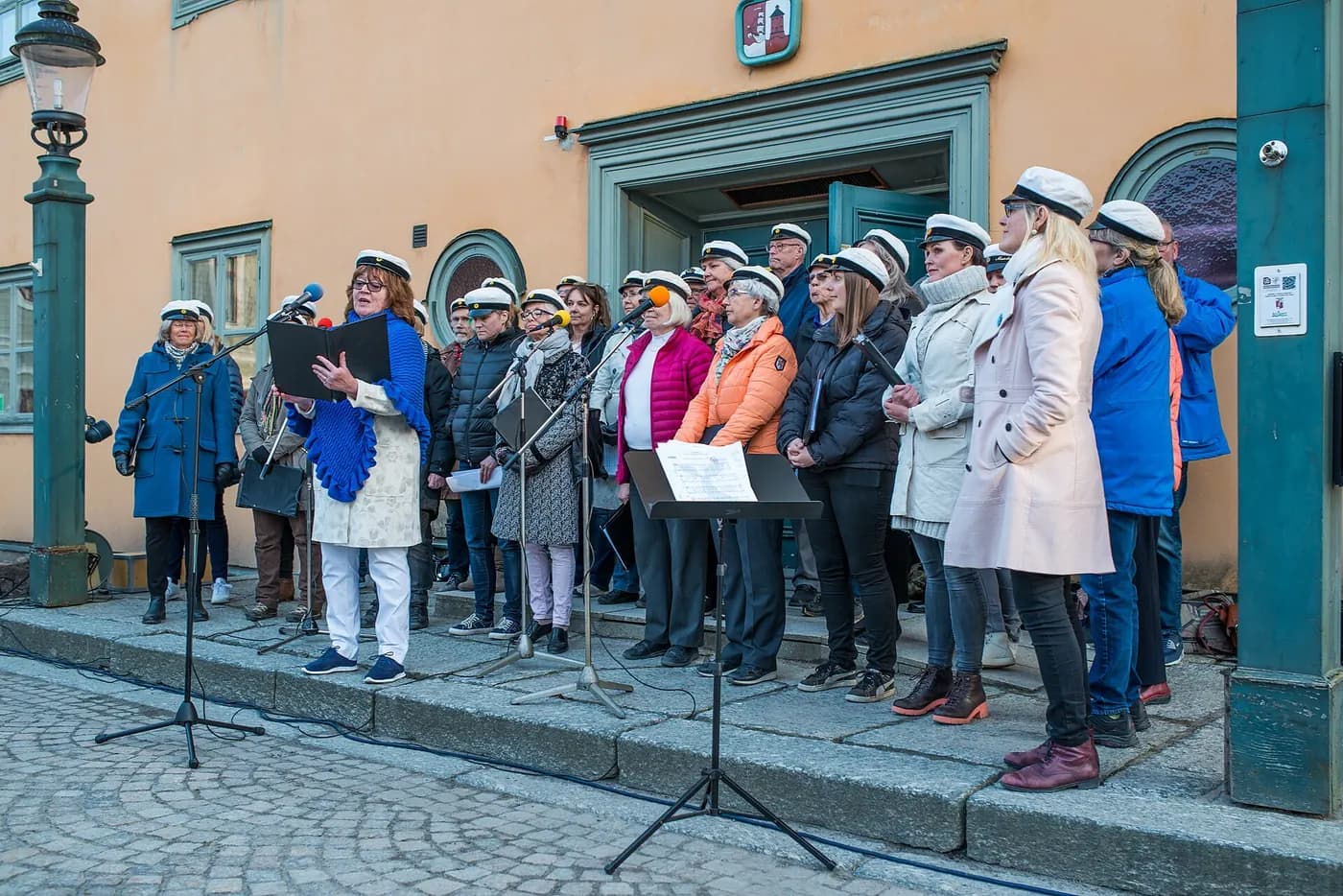
Valborg is not a family occasion but a neighbourhood one. A local association builds the pile, it is lit at dusk, and people stand around it, warm in the face and cold at the back. Nearly every choir in the country sings that night, and university students put on their white caps at the mösspåtagning.
University towns have their own versions. Uppsala has held a raft race on the Fyrisån since 1975, Lund calls the day siste april, and in Gothenburg the Chalmers students parade the Cortège through the streets. On 1 May come the Labour Day marches and speeches.
Words for the day
Tap a word to hear it.
- the Valborg bonfire
- the white student cap with a black peak
- the moment students put their caps on
- a speech to the spring, given by the fire
On the table
- sillunch
- a herring lunch, a fixture of student Valborg
- champagnefrukost
- a champagne breakfast, a student custom in Umeå
- ägg och brännvin
- eggs and aquavit, once served at the village meeting on 30 April
- struvor och mjöd
- funnel cakes and mead, typical of vappen in Finland
What people sing
- Längtan till landet (Vintern rasat)
- Words by Herman Sätherberg, music by Otto Lindblad, 1839. The student choirs' spring song par excellence.
- Sköna maj, välkommen
- Words by Johan Ludvig Runeberg, music by Lars Magnus Béen. A standard of the Valborg repertoire.

From Chile
In Chile 30 April falls in mid-autumn, with the days drawing in, the opposite of what Sweden is celebrating that night. What the two countries do share is the holiday the next day, 1 May.