Late June
Midsommar
How to say it
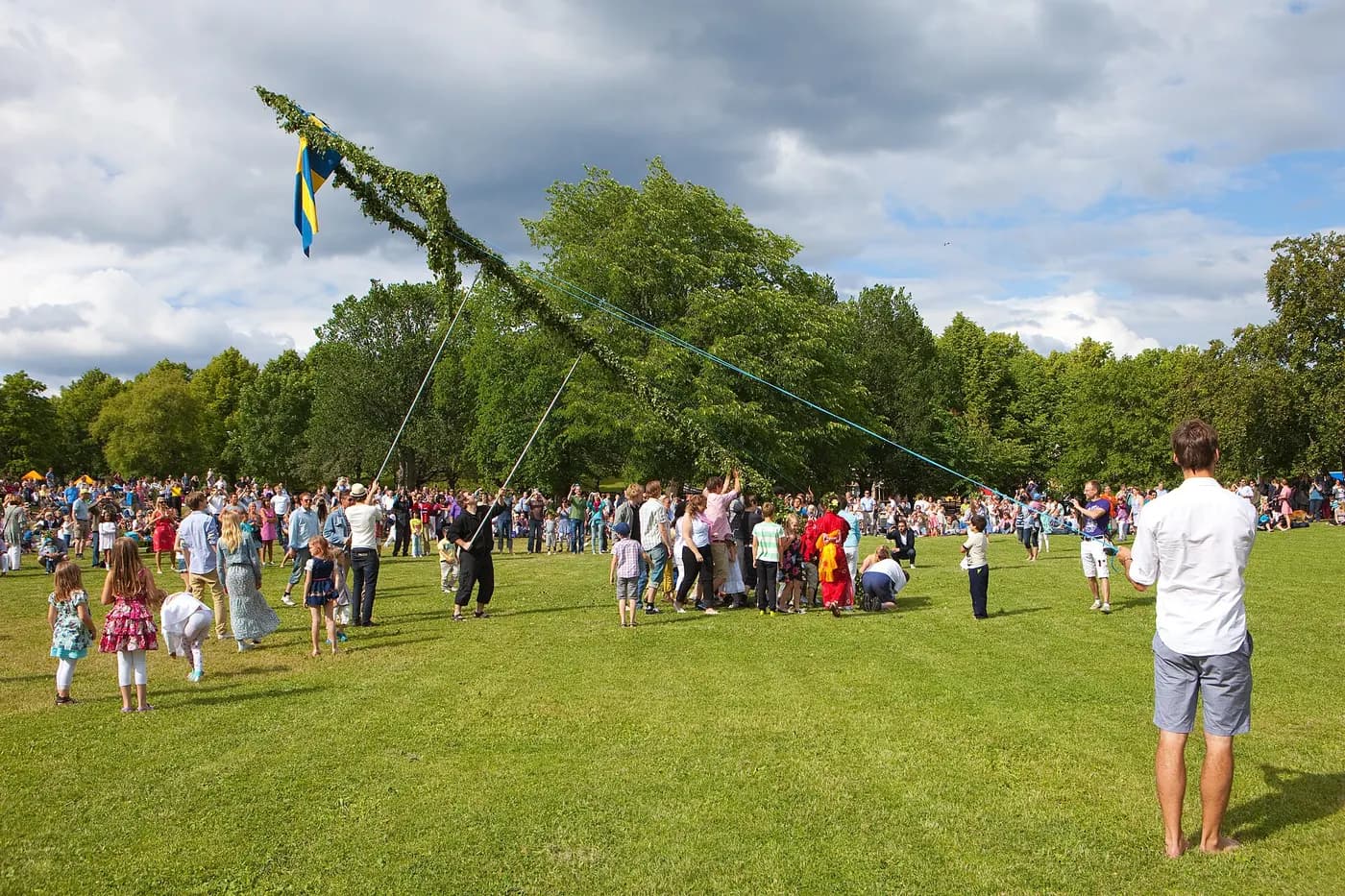
Midsommar is the midsummer festival and, after Christmas, perhaps the most important celebration in Sweden. It falls on the Friday between 19 and 25 June, with a pole dressed in leaves and flowers, ring dances and herring.

Where it comes from
The word already appears in Old Swedish as miþsumar in the Västergötland law of the late 13th century. Since the 4th century the church has marked the birth of John the Baptist on 24 June, which is why Denmark and Norway call the day Sankt Hans.
One of the earliest accounts comes from Bishop Olaus Magnus in 1555: on St John's Eve, people of every age gathered in town squares and open fields to dance by the light of many bonfires. There is no evidence of a solstice festival before Christianity.
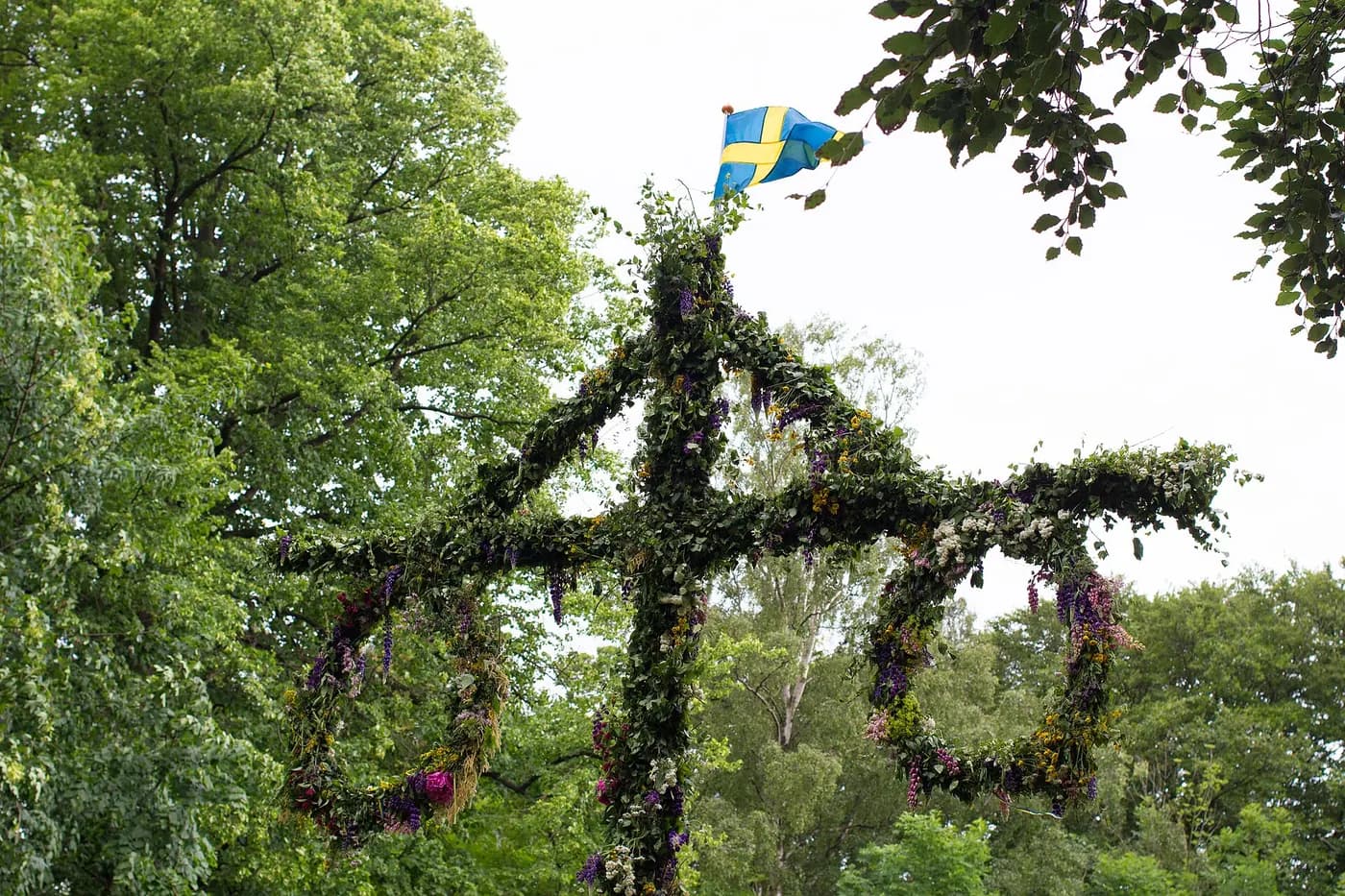
The midsummer pole, the midsommarstång, probably reached Sweden from Germany in the Middle Ages. The earliest images are in Erik Dahlbergh's Suecia antiqua from the late 17th century. In 1689 the parish of Björksäter banned the raising of poles because of the bad behaviour of the young people around them.
Today's celebration was shaped by the middle class around the mid-19th century, with dancing round a pole in the form of a leafy cross. Swedish flags as decoration were almost unknown then. Dancing to songs took off in the 1920s.
Until 1952 Midsummer Eve was always 23 June. Since 1953, to fit the working week, it has always been a Friday between 19 and 25 June.

How it is celebrated today
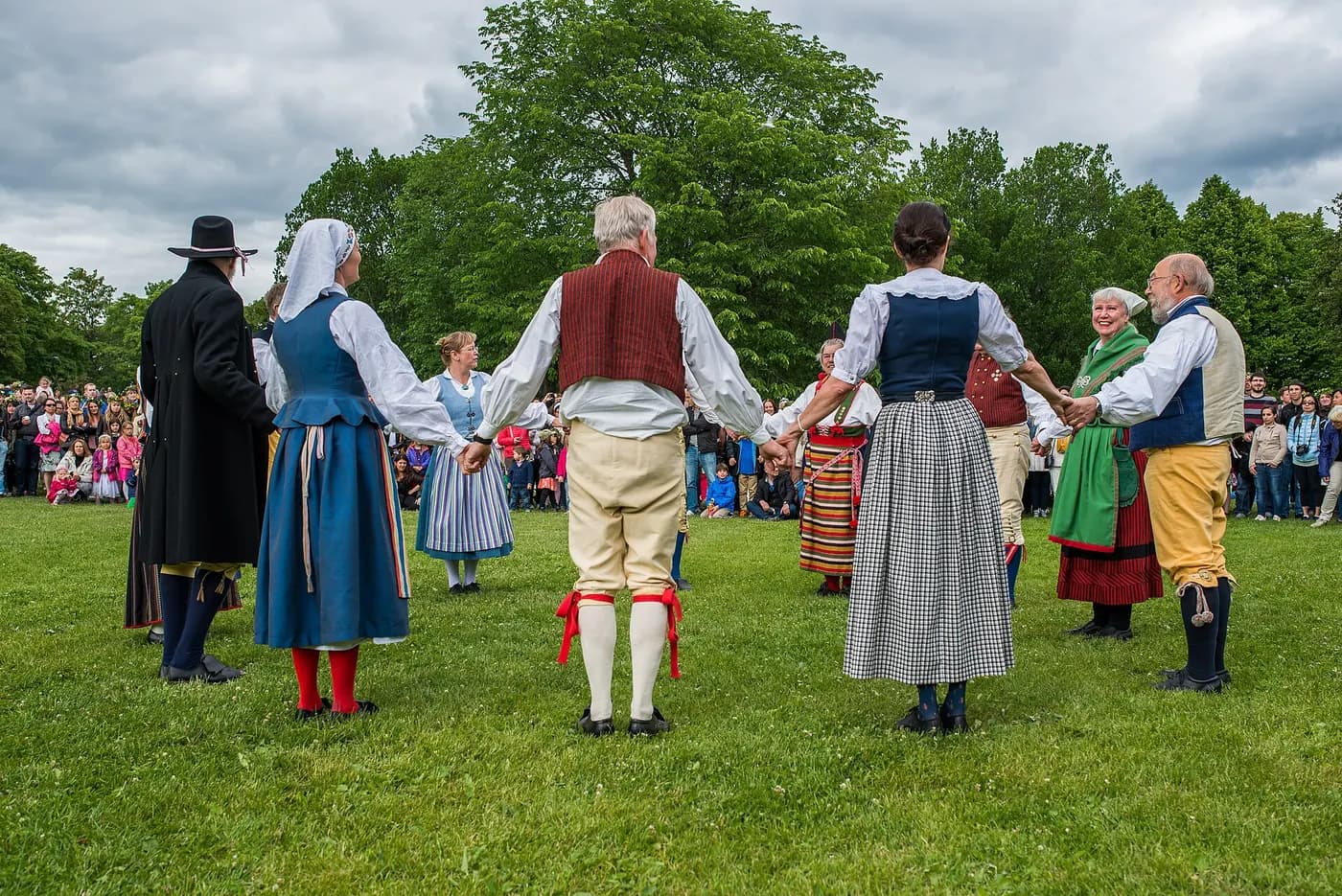
Many people head to the countryside, so cities empty out and the roads fill up. The day starts with picking flowers and making wreaths; then the pole is raised and the ring dances begin, including Små grodorna, hopping like little frogs. Lunch is herring, new potatoes with dill, soured cream with chives and strawberries, with a song before every glass of schnapps.
The night has its own folklore. Put seven or nine kinds of flowers under your pillow and you will dream of the person you will spend your life with. Midsummer is also a popular time to marry, and many end the evening on an outdoor dance floor.
Words for the day
Tap a word to hear it.
- the midsummer pole, dressed in leaves and flowers
- a flower crown
- to decorate with leaves; hence majstång, nothing to do with May
- the glass of schnapps on the midsummer table
On the table
- inlagd sill
- pickled herring, in several varieties
- färskpotatis med dill
- boiled new potatoes with dill
- gräddfil och gräslök
- soured cream with chives, served with the herring
- jordgubbstårta
- cake topped with the first strawberries of summer
- snaps
- schnapps, often spiced, drunk after a song
What people sing
- Små grodorna
- The little frogs song, danced round the pole. It first appeared in a Swedish songbook in the 1920s.
- Helan går
- Sweden's best-known drinking song, sung before the first glass.

From Chile
Sweden's longest day is Chile's shortest: Midsommar falls at the southern hemisphere's winter solstice. Since 2021 that solstice has been a public holiday in Chile, the National Day of Indigenous Peoples.
Sources
- nordiskamuseet.se/utforska/hogtider/midsommar
- sweden.se/culture/celebrations/swedish-midsummer
- sv.wikipedia.org/wiki/Midsommar
- sv.wikipedia.org/wiki/Midsommarafton
- sv.wikipedia.org/wiki/Sm%C3%A5_grodorna
- sv.wikipedia.org/wiki/Helan_g%C3%A5r
- bcn.cl/leychile/navegar?i=1161743
- cnnchile.com/servicios/por-que-es-feriado-este-viernes-20-de-junio